The Perception of Time Acceleration
timepsychologylong
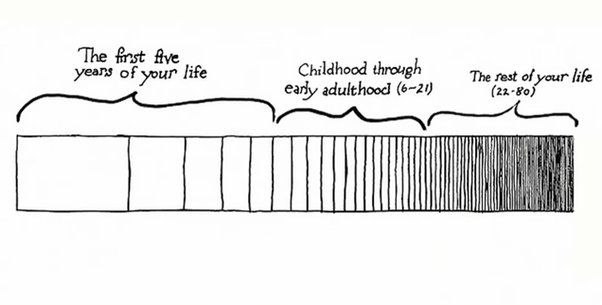
The longer we live, the more experience we gain. And with experience, the sharpness and vividness of external impressions decreases — it is these impressions that shape our sense of time passing.
When you’re a child, everything is new. Each day is filled with first experiences — first day of school, first friends, first bicycle ride. These novel, vivid experiences create strong memories and make time feel like it’s moving slowly.
As adults, fewer things feel new. Routines take over. Your brain processes familiar information more efficiently, which means it spends less energy on encoding these moments into memory. Without these distinctive memory markers, years can seem to blur together and fly by.
This is why:
- A year as a 10-year-old represents 10% of their entire life — it feels huge
- A year as a 50-year-old represents only 2% of their life — it feels small
The proportion shrinks, and so does our perception of time.
What can you do?
To make time feel like it’s lasting longer, try to fill your life with new experiences. Learn a new skill, visit a new place, read books outside your usual genres, or take a different route to work.
Novelty slows down our perception of time and creates more lasting memories.